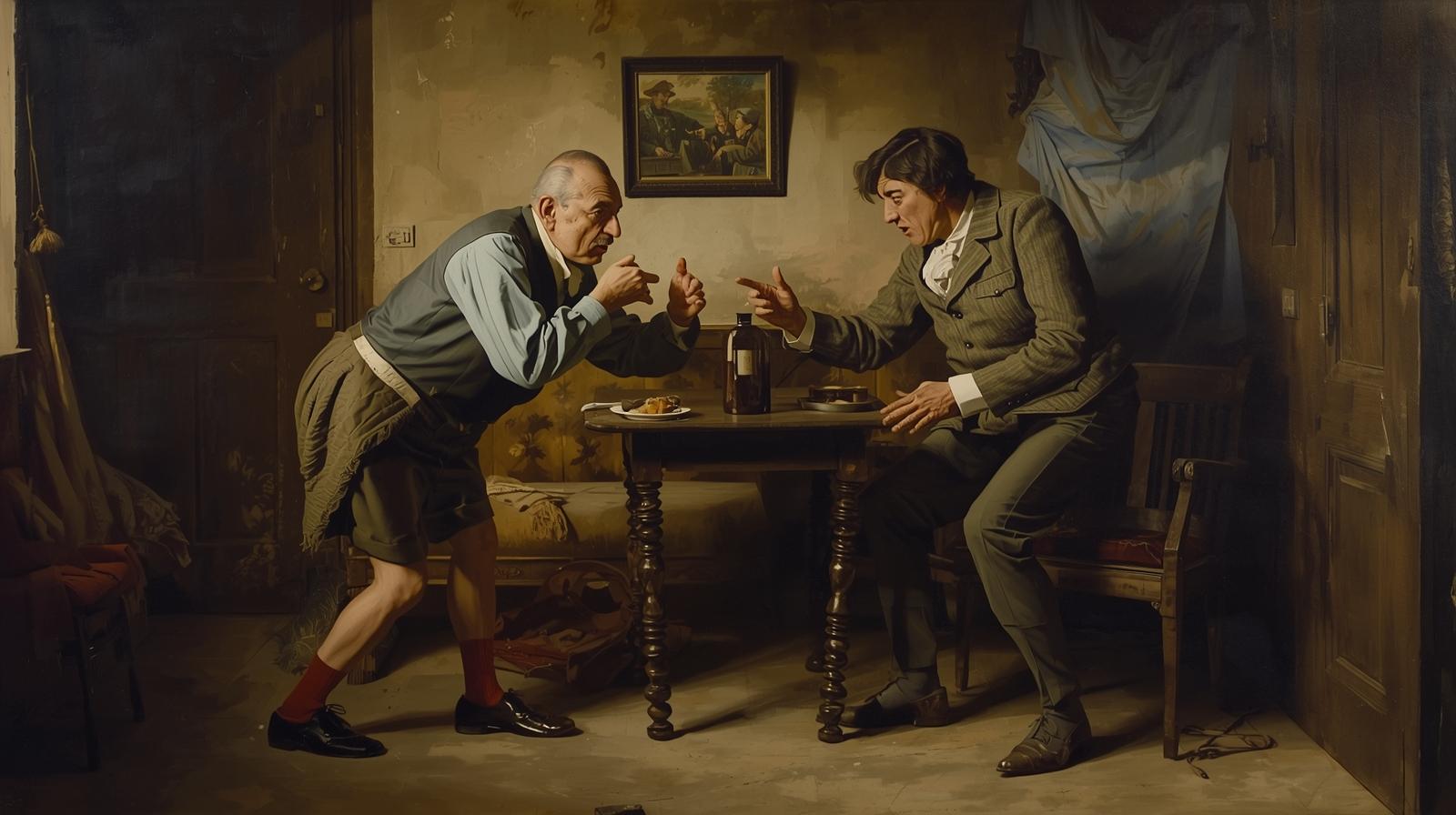
A Letter to God by F.L. Guentes portrays Lencho’s unwavering faith in divine intervention, clashing poignantly with his distrust of humanity.
Summary Analysis
Introduction
A Letter to God by a Mexican author named F. L. Guentes is an ironic tale about the life of a gullible, impoverished farmer named Lencho. In the story the protagonist loses a year’s worth of crops to a hailstorm. However, he did not lose his hope. He wrote a letter to God and surprisingly received an answer. But his unquestioning faith prevented him from thinking rationally about who could have pretended to be God and helped him during his difficult time. Lencho would rather trust an invisible force than the goodwill of a fellow human being.
Hopes and dreams
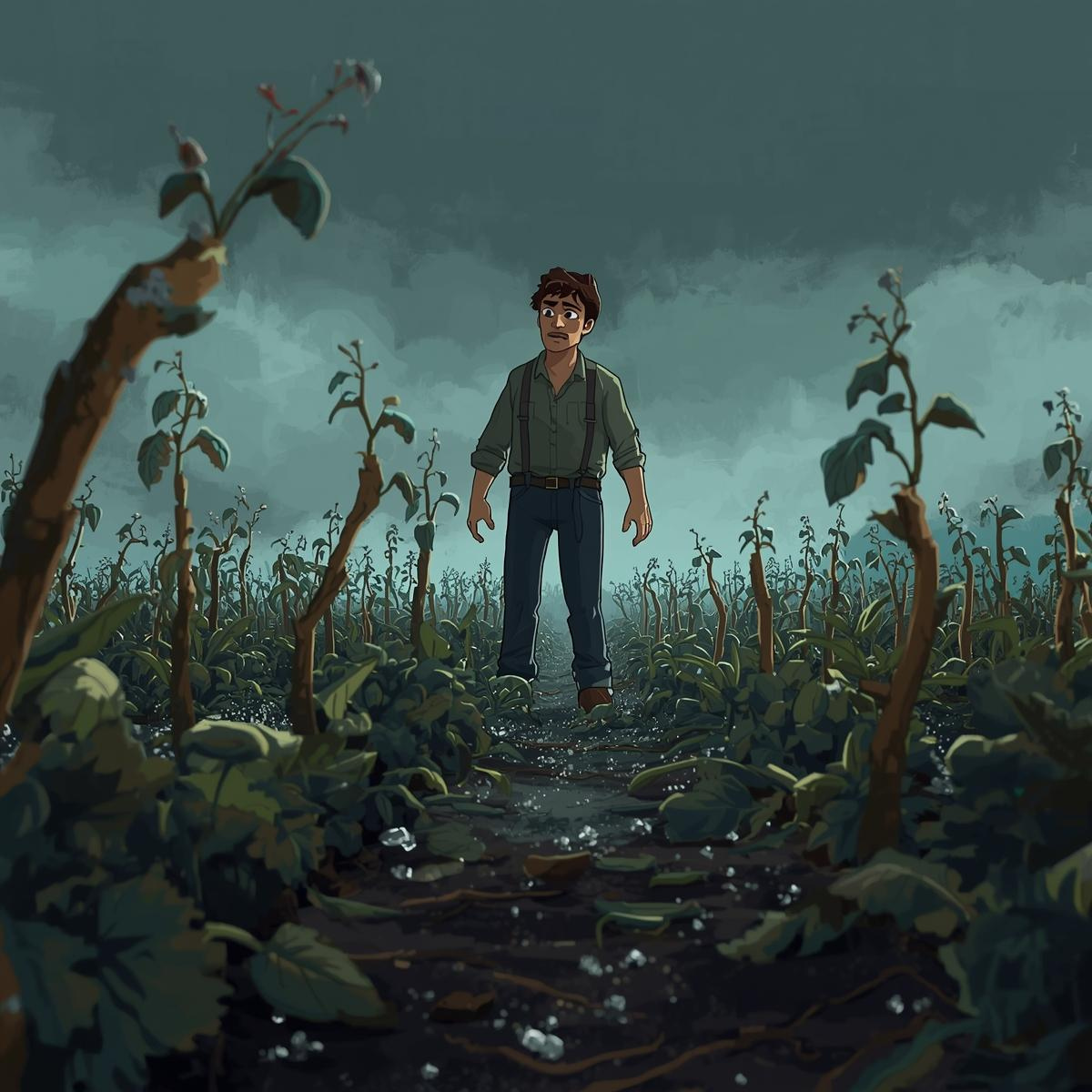
The beginning of the story thrusts us into the world of Lencho. We envision his house and his farmland through his eyes. His house—the only one in the entire valley—sits atop a low hill from where his beautiful farmland is clearly visible. We observe his intense joy and pride while describing his farmland of ripe corn dotted with flowers and how he hopes for a fruitful shower of rain to ensure an abundant harvest. At first it appears that his hopes and prayers for rain came true. However, his happiness soon turned to dismay as he observed the rainstorm gradually turning into a hailstorm, destroying his harvest.
Ruin
The storm left a ruin of his hard work and harvest. He exclaimed, “A plague of locusts would have left more than this.” He was devastated at the loss, as this harvest is the means of food and resources for his family. He feared they would die of hunger. But even in that desperate moment of his life, the faith of God gave him hope and light.
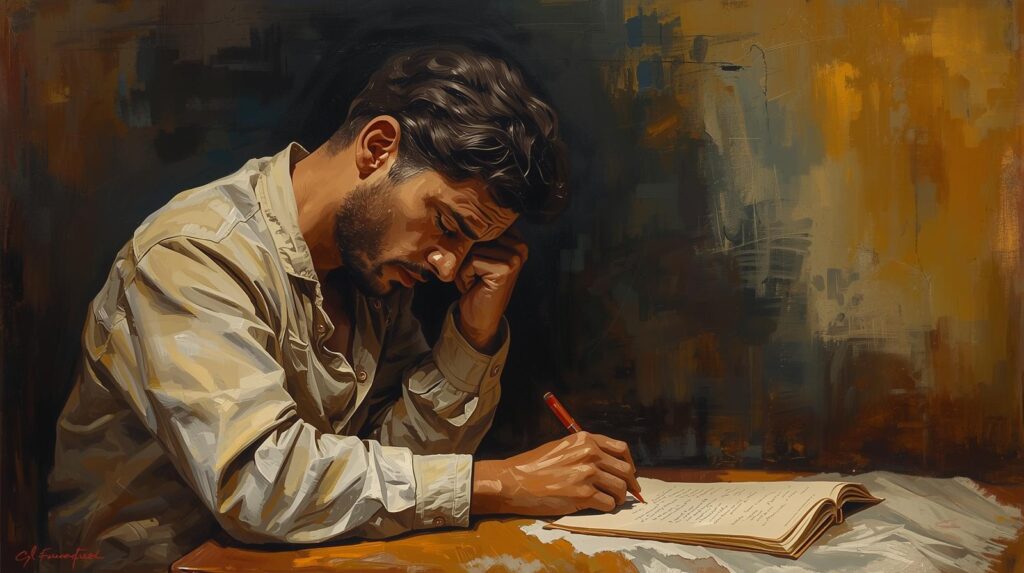
His deeply instilled faith in God and his mercy reassured him. The following Sunday he went to the town and wrote a letter to God. In his letter he prayed to God to give him a hundred pesos so that he can resow his field. Otherwise, they would go hungry that year and put it into the mailbox.
Generosity
The postmaster received the letter and felt amazed at the blind devotion of Lencho, admiring his innocent faith. He decided to help Lencho, and with this objective in mind, he started collecting money from his employees and even gave a part of his salary. But even with all the contributions, he could only collect a little more than half of his request. He put the money in an envelope addressed to Lencho and with it a letter containing only a single word as a signature: God.
Lencho undoubtedly expected to find money in his envelope. He wholeheartedly believed that God would answer his prayer. However, he was surprised to receive only a little more than half the amount he requested in his letter to God. He trusted that God could never make any mistake and that the post office workers must have stolen his money.
Irony
The ending left us baffled, bringing us back to the question of where we should truly invest our faith. Lencho received help, but instead of being grateful, he was angry at the lesser amount. It is ironical that he did not question the authenticity of the signature. He ignorantly mistrusted the people who genuinely cared and tried to help him. His unwavering faith starkly contrasts with his scrutiny of the office workers whom he perceived to be the scammers.
Oral Comprehension:
1. What did Lencho hope for?
Lencho hoped for a favourable shower of rain for his crops before harvest.
2. Why did Lencho say the raindrops were like ‘new coins’?
A good shower of rain before harvest means good crops. The crops are the main source of prosperity for Lencho. Hence, he compared them to new coins.
3. How did the rain change? What happened to Lencho’s fields?
A strong wind began to blow along with the rain, and large hailstones began to fall.
Lancho’s field was covered with white hailstones. The cornfield was completely ruined; not a single flower was left in the end.
4. What were Lencho’s feelings when the hail stopped?
Lencho was heartbroken over the loss of his crops, as they were his and his family’s only means of survival. The hailstones ruined his corn completely.
5. Who or what did Lencho have faith in? What did he do?
Lencho had faith in his God. He wrote a letter to God asking for help.
6. Who read the letter?
A postmaster read the letter.
7. What did the postmaster do then?
The postmaster collected money to help Lencho in order to keep his faith in God.
8. Was Lencho surprised to find a letter for him with money in it?
No, Lancho was not surprised at all.
9. What made him angry?
He had asked for a hundred pesos in his letter to God but received only a little more than half of the amount in return. He believed that God can never make any mistake and that the postman and others have stolen his money.
10. Who does Lencho have complete faith in? Which sentences in the story tell you this?
When Lencho’s crops were destroyed, he wrote a letter to God asking for a hundred pesos. His innocent faith inspired pity and admiration from the postman, who later became an instrument of divine intervention. “Lencho showed not the slightest surprise on seeing the money; such was his confidence.”
Question Answers
11. Why does the postmaster send money to Lencho? Why does he sign the letter ‘God’?
The postmaster admired Lencho’s unwavering faith in God. Overcome with compassion, he felt an overwhelming desire to retain Lencho’s faith in higher powers. He collected money from his employees and gave part of his salary as an act of charity to help him out as much as possible. He signed the letter as God to keep Lencho’s faith in God. His act of kindness served as an instrument of divine intervention in Lencho’s life.
13. Did Lencho try to find out who had sent the money to him? Why/Why not?
Lencho was a man of blind faith. His actions were inspired by blind devotion without reasoning. When his crops were destroyed by a hailstorm, he wrote a letter to God with a prayer asking to help him with a hundred pesos so that he could sow his field again. The postmaster, admiring his faith, decided to help him by collecting money and putting it in an envelope. He signed the letter as God to retain Lencho’s innocent faith. Lencho, however, was not surprised by the letter with money at all. Therefore, he had no reason to look for the actual sender of the money.
14. Who does Lencho think has taken the rest of the money? What is the irony in the situation?
The postmaster, out of kindness, collected money for Lencho. He put the money into an envelope addressed to Lencho and, with it, a letter containing a single word: ‘God’. The following Sunday Lencho received the letter from the postmaster and was not surprised at all to find money in the envelope. However, after counting the money, he was enraged to find it was only a little more than half of what he had requested in his letter to God. In Lencho’s mind, God could never make a mistake.
He ignorantly believed that the post office employees must have stolen the rest of his money. The irony is that the office workers were the ones who helped him. But Lencho’s blind faith prevents him from questioning the authenticity of the signature. Instead of feeling grateful for receiving assistance, he chose to doubt the sincerity of the post office employees.
There are different names in different parts of the world for storms depending on their nature. Can you match the names in the box with their descriptions below and fill in the blanks?
(gale, whirlwind, cyclone, hurricane, tornado, typhoon)
- A violent tropical storm in which strong winds move in a circle: cyclone
- An extremely strong wind: gale
- A violent tropical storm with very strong winds: typhoon
- A violent storm whose centre is a cloud in the shape of a funnel: tornado
- Type of violent storm with very strong winds, especially in the western Atlantic Ocean: hurricane
- A very strong wind that moves very fast in a spinning movement and causes a lot of damage: whirlwind